ChatGPT Ads: A Comprehensive Guide

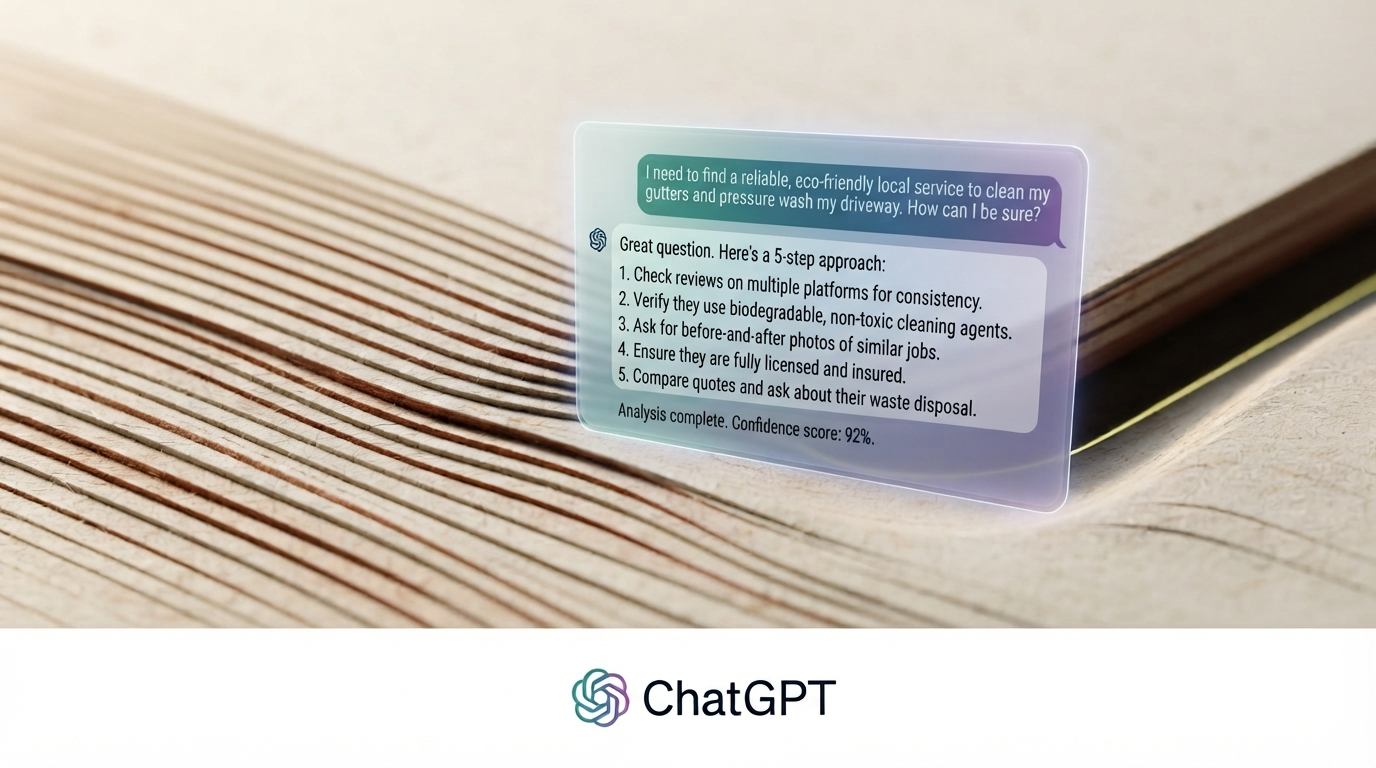
- McKinsey found half of US consumers now intentionally use AI-powered search when they buy, and 44% of AI search users call it their primary source of insight, ahead of traditional search at 31%.
- ChatGPT reaches about 900 million people a week and its ad business passed a $1 billion annualized run rate in under 200 days, so eligible brands should get set up and running now.
- ChatGPT ads match on conversational context through context hints, so creative and landing pages carry the weight that keyword lists carry in search.
- Eligibility depends on category and country: local services, travel, and education are open, financial services is limited to approved US advertisers, and alcohol and gambling ads are disallowed.
Your consumers have started asking AI before they search Google, and ChatGPT ads are now the most direct way to be present at that moment.
Half of US consumers now intentionally seek out AI-powered search when they make buying decisions, according to McKinsey's research on AI search, and McKinsey projects that $750 billion in US revenue will flow through AI-powered search by 2028. ChatGPT is where much of that research happens, and since February 2026 it has been open to advertisers. This guide covers why that matters, how the ads work, what they cost, which industries can run them, and how to measure them.
The short answer: ChatGPT ads are sponsored placements shown below ChatGPT's answers for people on the Free and Go plans, bought on a CPM or CPC basis through OpenAI's Ads Manager or its partners. They put your brand in front of buyers while they're comparing options, a moment search used to own. The US is the most developed market, Canada has access with added category restrictions, and because the platform is growing this quickly, we recommend every eligible brand get set up and running campaigns now.
Why ChatGPT Ads Matter Now
ChatGPT ads matter because a large and growing share of purchase research now happens inside AI conversations, and until this year brands had no paid way into them. The audience is already enormous. OpenAI said in February 2026 that ChatGPT had about 900 million weekly active users, up from 500 million in March 2025.
The bigger change is where buyers place their trust. McKinsey's AI Discovery Survey of 1,927 US consumers found that 44% of AI-powered search users call it their primary and preferred source of insight, ahead of traditional search at 31%, retailer or brand websites at 9%, and review sites at 6%.

The same McKinsey research found that 40% to 55% of consumers in sectors including travel and financial services already use AI-based search to make purchasing decisions, and it estimates that unprepared brands could lose 20% to 50% of their traffic from traditional search as decisions move earlier in the process. Advertisers have noticed. OpenAI announced that ChatGPT ads reached a $1 billion annualized revenue run rate in less than 200 days after launch, and AdExchanger reports that more than 100,000 advertisers have now run campaigns on the platform.
If your buyers build their shortlist in ChatGPT and you aren't there, you're relying on a later touchpoint to win back a decision that's already half made. That's why we recommend getting set up now. Setup takes time, since every business is verified and every ad and landing page is reviewed before it runs, and the brands that go live early build the account history, creative learnings, and conversion data they'll need as more competitors arrive.
Key Takeaway: Buyers have moved a meaningful share of their research into AI, and the brands active on ChatGPT now will understand the channel before their competitors do.
What Are ChatGPT Ads?
ChatGPT ads are paid placements from businesses that appear below ChatGPT's responses, labeled as sponsored and kept separate from the answer. Each ad carries the advertiser's name, logo, headline, description, image, and landing page. Ads run only on the Free and Go plans, never on Plus, Pro, or Business plans, and aren't shown to users identified as under 18. The rollout began in the US on February 9, 2026, and Canada was among the first markets added after it.
OpenAI built the product around a set of published principles: ads don't influence ChatGPT's answers, conversations stay private from advertisers, and ads don't appear near sensitive topics such as health, mental health, and politics.
Sustained adoption is still settling. The Information put active advertisers at about 60,000 in early October, so not every brand that tries the platform keeps spending.
Key Takeaway: ChatGPT ads come with clear content guardrails, and staying power depends on having tracking in place from the first campaign.
How ChatGPT Ads Work
You can buy ChatGPT ads on CPM or, since May, on CPC through OpenAI's self-serve Ads Manager or through an agency partner. Conversion-optimized campaigns are a third option, and delivery runs on a relevance-weighted, second-price auction.
Targeting is where ChatGPT departs most from search. You don't bid on keywords. Instead, you write context hints that describe the conversations and topics where your offer is relevant. They aren't exact-match keywords, and they don't guarantee delivery. The system weighs the conversation, your hints, your creative, and your landing page together, so relevance and landing-page quality carry more of the load than they do in paid search.
Formats are expanding, and new units usually start in the US. In October, OpenAI introduced visual ads that appear alongside images people generate in ChatGPT, and it began testing Sponsored Agents with select US advertisers in September.
Key Takeaway: You buy ChatGPT ads on conversational context, so your levers are context hints, creative, and landing pages, and none of them work like a keyword list.
What Do ChatGPT Ads Cost?
The barrier to entry has dropped sharply since launch. At launch, The Information reported a CPM of about $60, and Adweek confirmed a $200,000 minimum commitment for early beta advertisers. Today, OpenAI's self-serve Ads Manager lets businesses set their own budgets, bids, and pacing, and OpenAI suggests starting CPC campaigns at a maximum bid of $3 to $5 per click.
For the mid-market brands we work with, we recommend starting with an always-on budget large enough to generate steady conversion data, then scaling the campaigns that earn their place.
Key Takeaway: The entry price is now low enough that the bigger cost is waiting, because every month on the sidelines is a month of learning your competitors keep.
ChatGPT Ads by Industry: Where Each Sector Stands
OpenAI's ad policies focus early advertising on a limited set of consumer categories, including household and consumer goods, local services, travel and entertainment, and digital products and education. Here's how that plays out across consumer services.
Home Services
HVAC, plumbing, roofing, lawn care, and restoration brands fit the local services category, so eligibility is rarely the issue. Fit is the bigger question. Because ChatGPT matches on conversation context, we'd confirm during setup that location settings line up with your service footprint and judge results on cost per booked job against paid search and Local Services Ads, the same yardstick we use across our home services marketing work.
Financial Services
Financial services is a restricted category, open to approved advertisers who may face enhanced verification and manual review, and ads for cryptocurrency, credit repair, debt settlement, and debt assistance are disallowed. Financial services ads outside the US are generally prohibited. US banks, insurers, and lenders should plan for a longer approval path, while Canadian financial services brands should focus on how ChatGPT describes them in its organic answers for now.
Automotive Services
Repair, collision, tire, and quick-lube chains look like local services and should be eligible, although we'd confirm that during account review. Financing offers are a separate matter, because auto loans and leases fall under the financial services rules and need approved-advertiser status. We recommend keeping service and finance messaging in separate campaigns so a finance claim doesn't delay approval for your automotive services ads.
Education Services
Education sits within the early-focus categories, so colleges, universities, and training providers can generally advertise. The constraint is audience, since OpenAI doesn't show ads to users identified as under 18, and that removes most high school students from undergraduate recruitment. Graduate, continuing education, and adult learning programs are the cleaner fit for education services testing.
Hospitality Services
Hotels, resorts, golf properties, and travel brands fit the travel and entertainment category, and travel is one of the sectors where AI search already shapes purchases. Alcohol and gambling ads are disallowed, although casino resorts can promote lodging and entertainment where gambling isn't the focus. Hospitality services brands should lead with destination and booking offers and keep restricted amenities off the landing page.
Key Takeaway: Confirm your category, your specific offers, and your landing pages are eligible before planning to spend, because OpenAI reviews all three.
How to Track Real Business Outcomes From ChatGPT Ads
To track real business outcomes from ChatGPT ads, pick the conversion that matters to your business, measure it with OpenAI's pixel and Conversions API, and compare cost per outcome against your blended search benchmark over the same window. OpenAI added both tools in May. We also add UTM parameters to every landing page so ChatGPT traffic shows up in the analytics tools you already use.
Early independent data shows why this discipline matters. A working paper by Maximilian Kaiser and Christian Schulze, reported by Search Engine Journal, found that US ChatGPT ad visits earned $0.89 in revenue against $2.45 for paid Google Search visits, with conversion rates of 0.37% and 1.17% respectively.

Of the 87 advertisers in that study buying both channels, 84 earned less per ChatGPT visit, and a single advertiser drove 66% of all ChatGPT ad purchases. Individual results can look much better. OpenAI cites DV Rockerbox data showing WeightWatchers' attributed cost per acquisition on ChatGPT ran 15.3% below its blended paid search benchmark. The spread tells you execution decides the outcome, and that revenue per visit alone won't capture the value ChatGPT creates earlier in a decision.
Creative Enhancements and Who Controls Your Message
On October 30, OpenAI turned on creative enhancements by default for self-serve campaigns. Unless you opt out, ChatGPT can adapt your title, description, and destination link to each conversation, and enhanced versions can run without you reviewing each variation first. For approved financial advertisers, franchise networks with brand approval rules, and Canadian campaigns that need signed-off French copy for Quebec, we recommend opting out at the campaign level.
Key Takeaway: Decide on creative enhancements campaign by campaign, and switch them off anywhere a regulator, a franchise agreement, or language requirements call for approved wording.
How to Plan Media Strategy Across Channels With ChatGPT in the Mix
Plan ChatGPT ads as a complement to paid search and organic AI visibility, with a defined role and its own success measure. Search captures stated demand, organic citations in ChatGPT shape the shortlist, and paid placements reach people while they're still comparing options. Paid placement won't change how ChatGPT describes your brand, so we'd give ChatGPT its own budget line, keep offers consistent with your search program, and report organic answer share alongside paid results.
Key Takeaway: Give ChatGPT ads a specific job in the plan, and run organic answer visibility as its own workstream with its own owner.
Why It Matters
- The shortlist forms earlier: buyers now compare options in AI before they reach search, so the first brand they meet shapes the choice.
- Absence has a cost: a competitor's sponsored answer can set the frame your search ads then have to argue against.
- Experience compounds: creative learnings and conversion data build over months, and that head start is hard to buy back later.
- Measurement decides who scales: early averages trail search, so the brands that can prove return will earn the bigger budgets.
Each of these favors the brands that are already active.
Closing Guidance
ChatGPT ads are moving faster than most planning cycles, so a clear operating stance is more useful than a perfect forecast.
What marketing leaders should do now:
- Start eligibility and approval early: check your category, offers, and landing pages against OpenAI's current ad policies in each market, and allow time for verification.
- Set up tracking first: install the pixel or Conversions API and add UTM parameters before any money goes live.
- Go live this quarter: start with your highest-intent offer and keep campaigns running long enough to build conversion data.
- Decide on creative enhancements: opt out wherever copy needs legal, franchise, or language sign-off.
The bottom line: your buyers are already researching in AI and the platform is scaling fast, so get set up and running on ChatGPT now wherever your category is eligible, and let measured results decide how far to scale.
If you're weighing ChatGPT ads and want them measured against real business outcomes, we're here to help.
Sources: McKinsey, OpenAI, AdExchanger, The Information, Adweek, Search Engine Journal, Kaiser and Schulze (working paper), DV Rockerbox.

Deryck Marriott is VP, Performance Media at Other.™, where he oversees the entire performance media practice. He leads specialized teams across programmatic, search, and social, each built around deep platform expertise.
Deryck makes sure the agency stays on the cutting edge of platform advancement and changes and that his team work diligently to deliver real business returns for clients.






Let’s raise the bar together.